

YANNICK MELLIER (1958-2025)
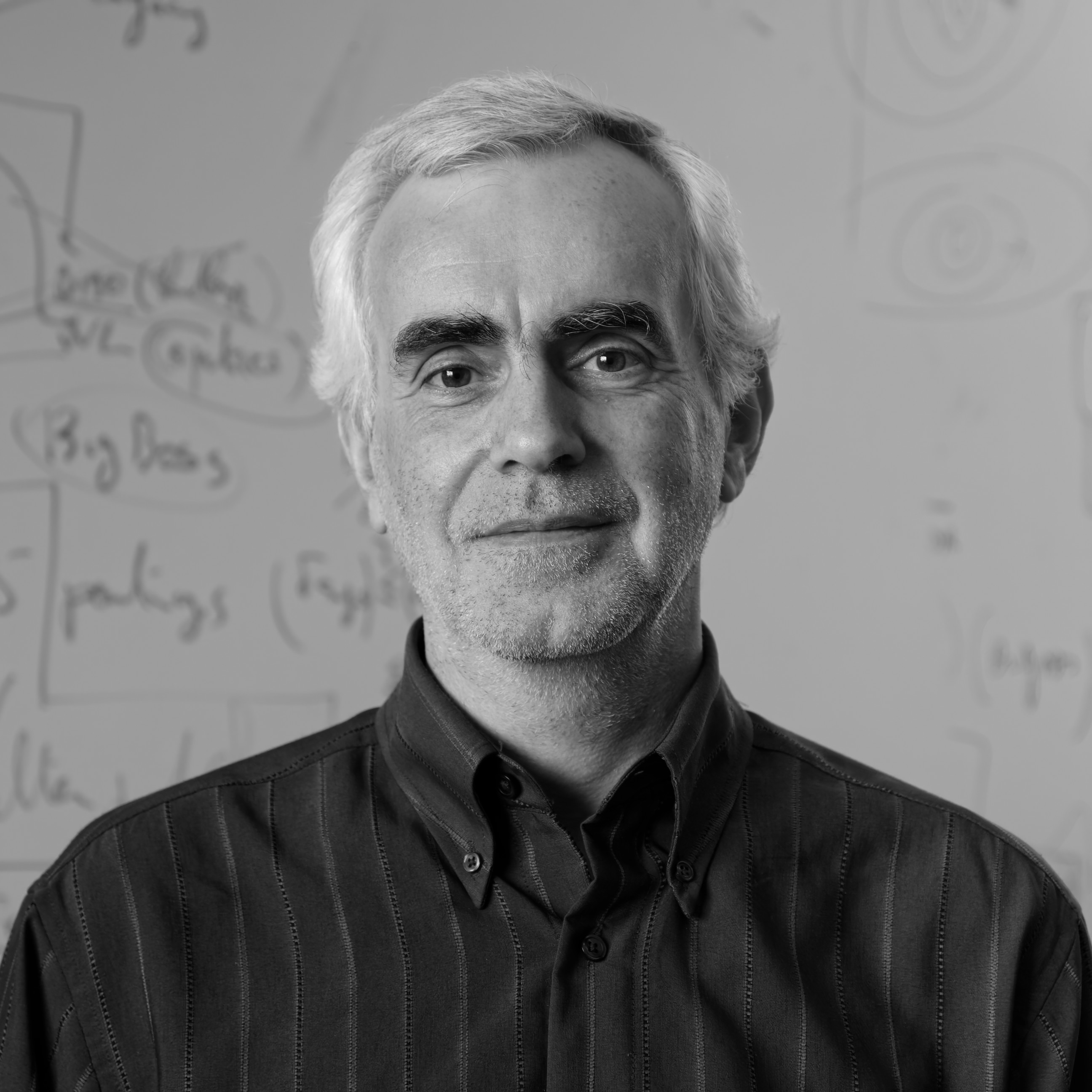 Photography of Yannick Mellier taken at IAP in June 2009, for the CNRS Silver Medal.
Credit: Jean Mouette /IAP-CNRS-SU
Our colleague Yannick Mellier died on December 19, 2025, at the age of 67. The scientific legacy he leaves behind is immense. He was one of the emblematic figures of the IAP and director of the Euclid Consortium since 2011.
Yannick earned his PhD from the University of Toulouse III, Paul Sabatier, in 1987 under the supervision of Bernard Fort. As part of his team, he contributed to the spectroscopic confirmation that the giant arc in the galaxy cluster Abell 370 was gravitationally lensed. This landmark work paved the way for demonstrating the immense potential of gravitational lensing for the study and mapping of the mysterious dark matter of the Universe.
It marked the beginning of a scientific and human adventure spanning more than 30 years, of which Yannick was both the driving force and the visionary.
The adventure began in Toulouse, with the very first CCD cameras such as MOCAM which were soon followed by the much larger 8K and the 12K cameras. Installed on the Canada–France–Hawaii Telescope, these instruments provided ground-based images of exceptional quality (often better than 0.5’’ resolution). The journey continued in Paris in the mid-1990s, when Yannick joined the IAP, with the MegaCam project and the establishment of the TERAPIX data centre for the reduction and exploitation of these large images. Yannick was the central pillar of this effort and the tireless driving force behind the development of these tools. The impact of the scientific products they delivered to the community was considerable.
Guided by a clear vision, Yannick succeeded in bringing the French lensing community to the forefront of the international community. In 2000, his team was among the first to demonstrate the effects of gravitational lensing by the large-scale structures of the Universe and to show that this measurement could constrain the cosmological model. This established lensing as a key probe in observational cosmology and helped motivate the development of the next generation of experiments, culminating in Euclid.
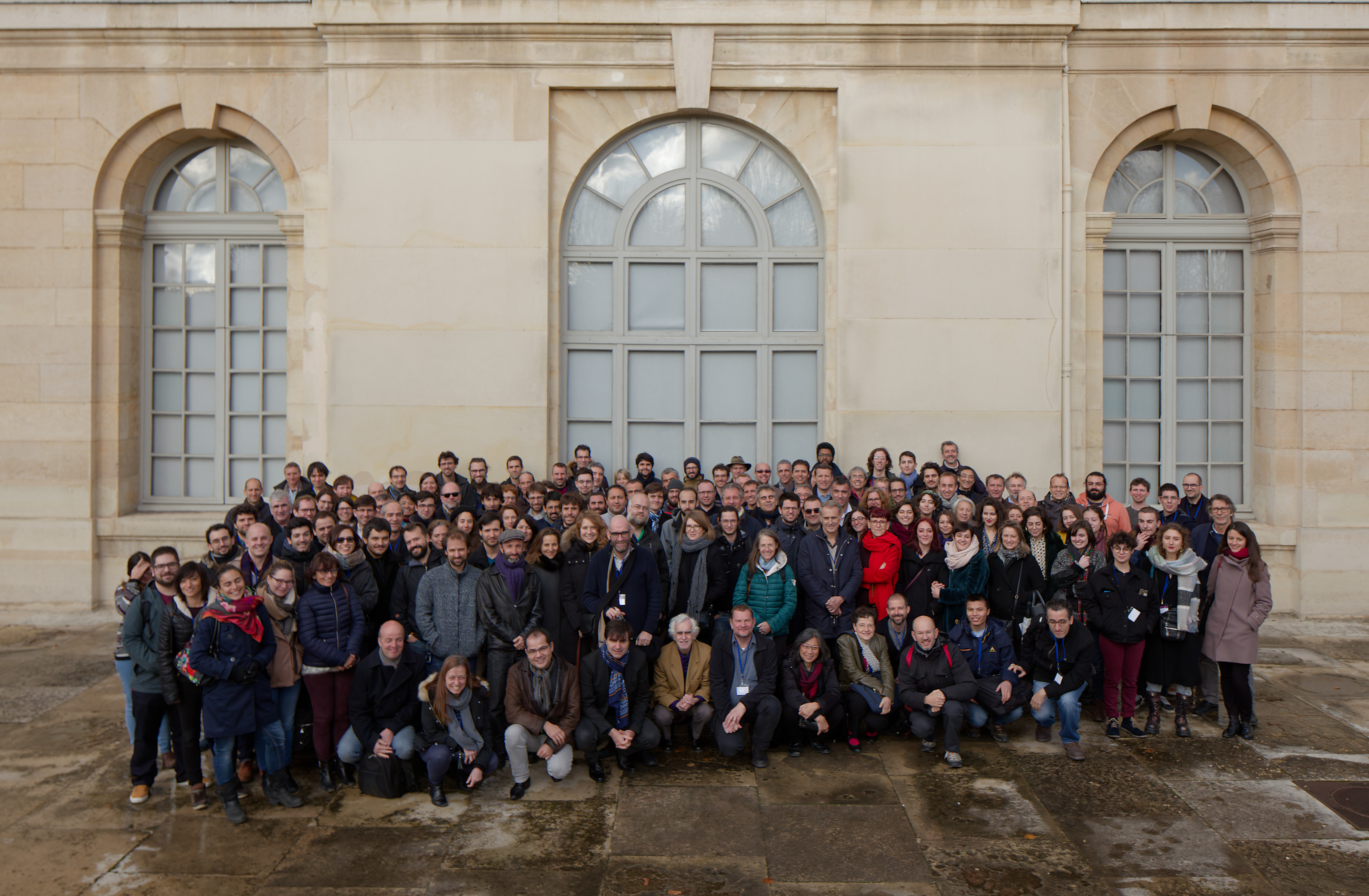 Group photograph from the Euclid France symposium, with Yannick Mellier (center), taken in front of the Paris Observatory on November 30, 2017.
Credit: Jean Mouette /IAP-CNRS-SU
In 2011, Yannick took the helm of the Euclid Consortium, of which he was already its principal architect. He led the consortium during its formative years, overseeing the final designs of the two onboard instruments, the design of the scientific ground segment, and the overall organization of the consortium. He also established the consortium’s scientific teams, a structure bringing together more than a thousand scientists to transform the mission’s exceptional capabilities into scientific results. He was also central to the project’s partnerships, working with ESA and international partners to secure the ground-based observations essential for Euclid’s science.
Despite becoming the embodiment of the Euclid project, his scientific legacy and his impact on the community extend far beyond it. As a member of dozens of national and international scientific committees throughout his career - within the CNRS, CNES, ESA, and ESO - Yannick was always deeply committed to supporting projects he considered promising, whatever they were and wherever they came from. He devoted himself tirelessly to the community, without ever seeking personal recognition; science was literally his raison d’être.
Even as one of the most prominent figures of our community, Yannick was disarmingly generous. Warm and collegial with fellow scientists and collaborators, he made it a point of honour to highlight the merit of each person’s contributions. He was deeply committed to ensuring that others were recognized and appreciated. He was a source of support for all who knew him and, for many of us, a friend. His work will continue to shape our field for many years to come.
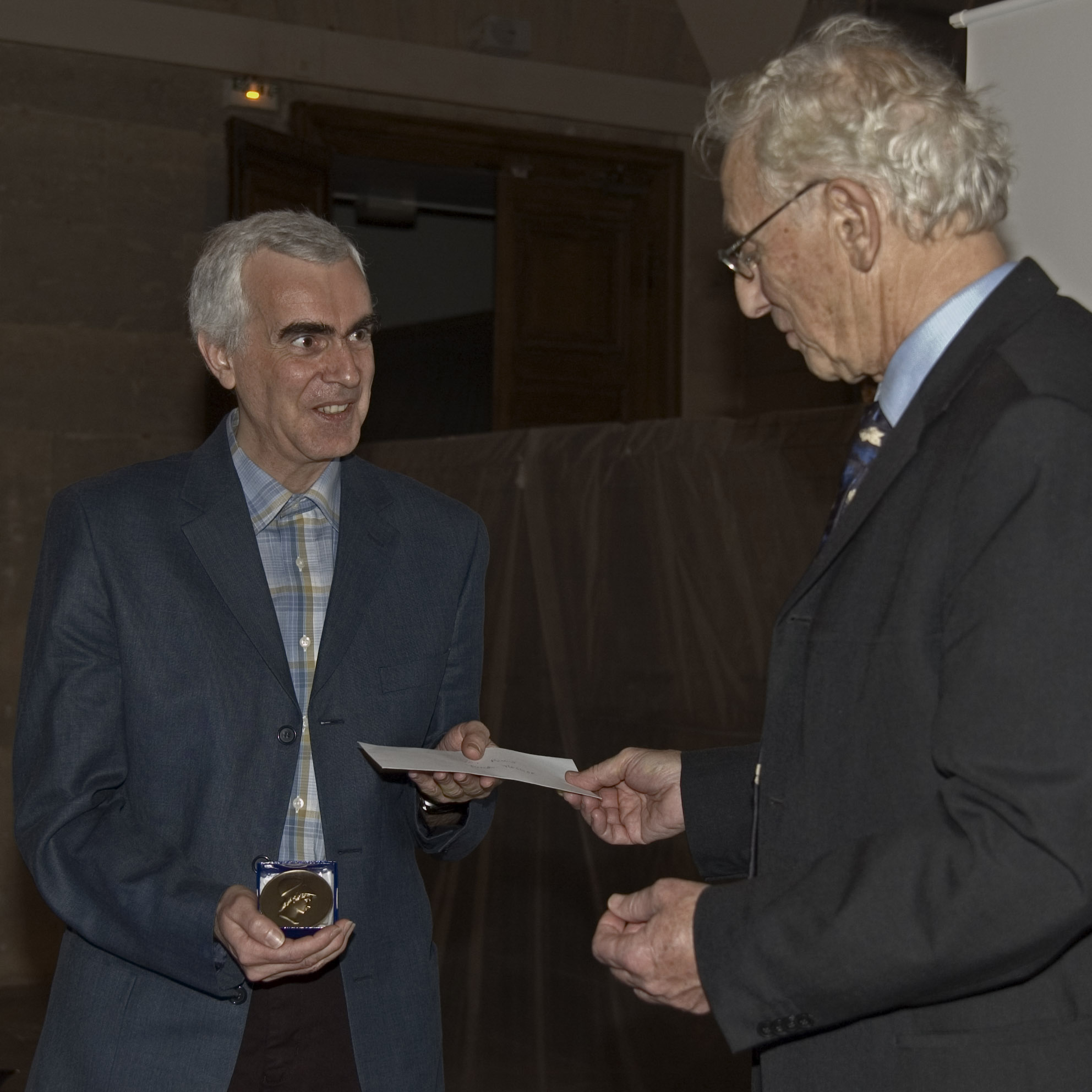 Photograph of Yannick Mellier taken at the Paris Observatory in November 2006 during the presentation of the SFP Jean Ricard Prize.
Credit: Jean Mouette /IAP-CNRS-SU
Yannick Mellier received the Jean Ricard Prize from the French Physical Society (SFP) in 2005, the Franco-German Gay-Lussac–Humboldt Prize in 2006, and the CNRS Silver Medal in 2009.
Links
 Those who knew him can pay tribute to him on the site created for this occasion.
These messages can be found on that website.
Conferences and films
Public conference (in French) at IHP, November 2015, “The Large Structures of the Universe” (Ideas in Science).
Public conference (in French) at IAP, April 2015, “Dark matter and dark energy: what will Euclid teach us?”.
Seminar at Collège de France, February 2015, “Dark matter and gravitational lenses” (Chaire Galaxies et cosmologie - Françoise Combes (2014-2015).
Film “Les 75 ans de l'IAP” (in French, 2013).
Video interview (in French, English subtitles, 3min 54s, unpublished, 2013).
Film (in French, ARTE, 2012), “The mystery of dark matter” (by Cécile Denjean).
Public conference (in French) at IAP, January 2004, “From large surveys to virtual observatories” (introduction by Ludovic Van Waerbeke).
December 2025