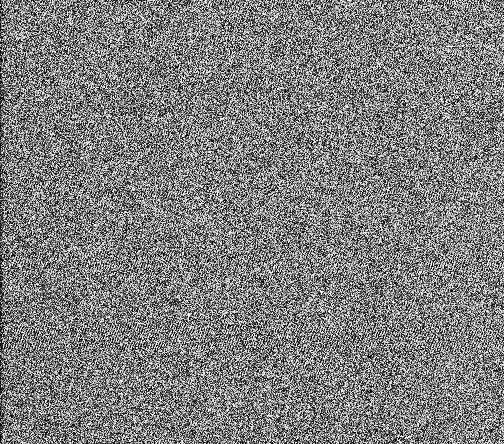
Bias and flat fields at the ESO Danish 1.54m telescope in La Silla in May 2006.
You are going to observe for the PLANET collaboration, here are some recommendations, advices and examples.
First, the normal mode of observation is the following :
The CCD is trimmed to 512x512 pixels, the begining in X is pixel xbegin=820, and in
Y it is ybegin=800. The amplifier to read the data is amplifier A, in high gain mode.
Fits header keywords
BIAS : the fits header keyword OBJECT is set to OBJECT=Bias
I band flat fields : the fits header keyword OBJECT is set to OBJECT=DomeFlatI
V band flat fields : the fits header keyword OBJECT is set to OBJECT=DomeFlatV
R band flat fields : the fits header keyword OBJECT is set to OBJECT=DomeFlatR
B band flat fields : the fits header keyword OBJECT is set to OBJECT=DomeFlatN
(yes, the keyword for B filter is N for internal reasons).
Exposure times
Turn the lamp on, then put the intensity to the indicated level below.
With the current lamp, it gives about 40 000 ADUs in one exposure.
Do not go to higher value, nor to much lower values.
B band 10 sec at intensity 200
V band 10 sec at intensity 100
R band 3 sec at intensity 100
I band 2 sec at intensity 100
Procedure
Take 50 biases and 50 flats in each band you are willing to observe.
We decided to beat the noise down, that's why we decided to stack lots
of them.
Remarks
How images should look ?
A bias should look like that, with a count level of about 310 ADUs.
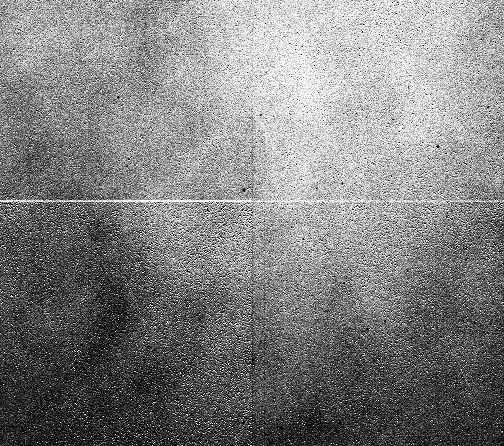
A I band flat should look like that :
A V band flatfield should look like that !
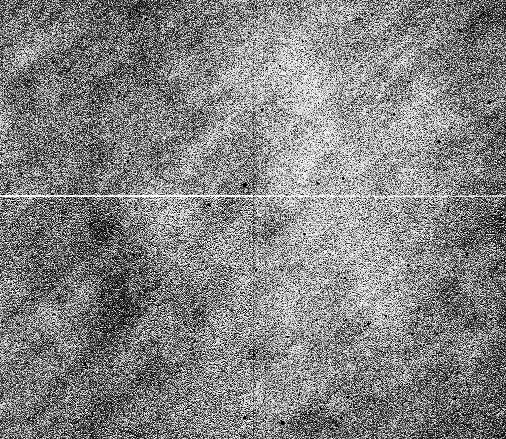
Ok, now you have seen the three typical example of calibration
images. Notice that the V and I flats are showing different responses.
Here after, I give some examples of I band flats where indeed,
the observer did a mistake. It is somehow a game to try to
figure out what the problem is !

Well, here, it looks like a bias... because the light is off,
the marguerite is closed and the sky baffle too.
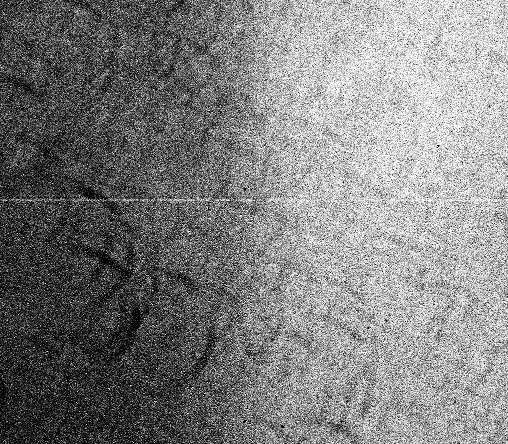
Here, the marguerite was not openned !
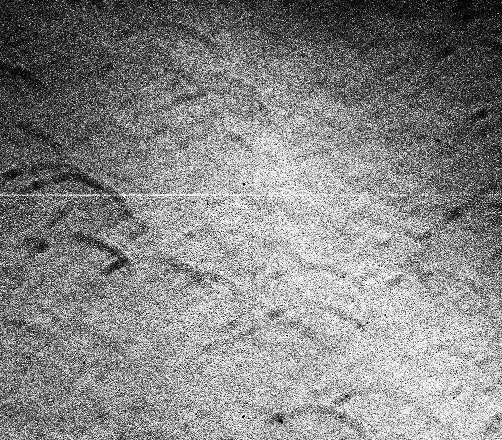
Here, the marguerite is openned, but the sky baffle is still closed.
All the light coming in is diffused light.
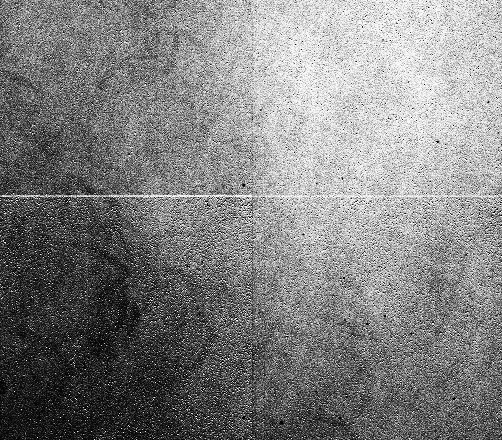
Here, you can notice that the illumination is not uniform,
because the telescope is pointing off the flat field screen.
You see some stripes that are not expected for I band flatfields...
because Simplicio observed with the V filter in !
All this might happen to the best of us...

Some standard examples of good flat fields in different bands.
Statistics on biases and flat fields
We did built biases and flats by computing median averages of 50 frames each night.
The statistics are obtained in MIDAS by using the
following
commands :
stat/ima biasmay*
stat/ima Domeflatmay*If [@300,@300:@400,@400]
Over the full frame for the BIAS
Median Sigma
bias may01 : 313.3598 13.00808
bias may02 : 312.2381 12.95979
bias may03 : 310.4411 12.97975
bias may04 : 315.8247 13.06589
bias may05 : 315.8247 13.06589
bias may06 : 315.0195 13.05160
bias may07 : 311.2028 13.00093
bias may08 : 310.3952 12.98041
bias may09 : 310.3952 12.98041
bias may10 : 310.7874 12.97566
bias may12 : 311.3871 13.00798
bias may13 : 310.1315 12.96297
bias may14 : 313.7131 12.98637
bias may15 : 311.4432 13.00599
bias may16 : 311.4010 13.00839
bias may17 : 310.0815 12.96053
We estimate that the Dark current at Danish 1.54m in La Silla is : 0.041 ADU/sec
So it is rather good.
Median flats normalized to 1.0 statistics
done on the area [Xmin=300,Ymin=300:Xmax=400,Xmax=400]
Median Sigma
may03 1.013599 7.309174e-03
may04 1.017787 7.249729e-03
may05 1.013581 7.376713e-03
may06 1.013494 7.335826e-03
may07 1.013661 7.283682e-03
may08 1.013687 7.297492e-03
may09 1.013703 7.432838e-03
may10 1.013743 7.324076e-03
may11 1.013743 7.324076e-03
may12 1.013663 7.354368e-03
may13 1.013773 7.285330e-03
may14 1.013712 7.312219e-03
may15 1.013581 7.353025e-03
may16 1.013656 7.380127e-03
may17 1.013675 7.360027e-03
Flats of May 7 divided by May 16. No systematic trends.
Sigma=2.426786e-03
Flats are stable over a period of a week at least.
Of course if the CCD warms up, it not true anymore, and one has to carefully take a new set of flat fields.
It means we have very stable flats. The bias went up a bit when people
forgot to put the N2 in the dewar, resulting in a warming of the CCD by
few degrees, before being cooled down later on.
JPB May 18, 2006.