

ROGER-MAURICE BONNET (1937-2026)
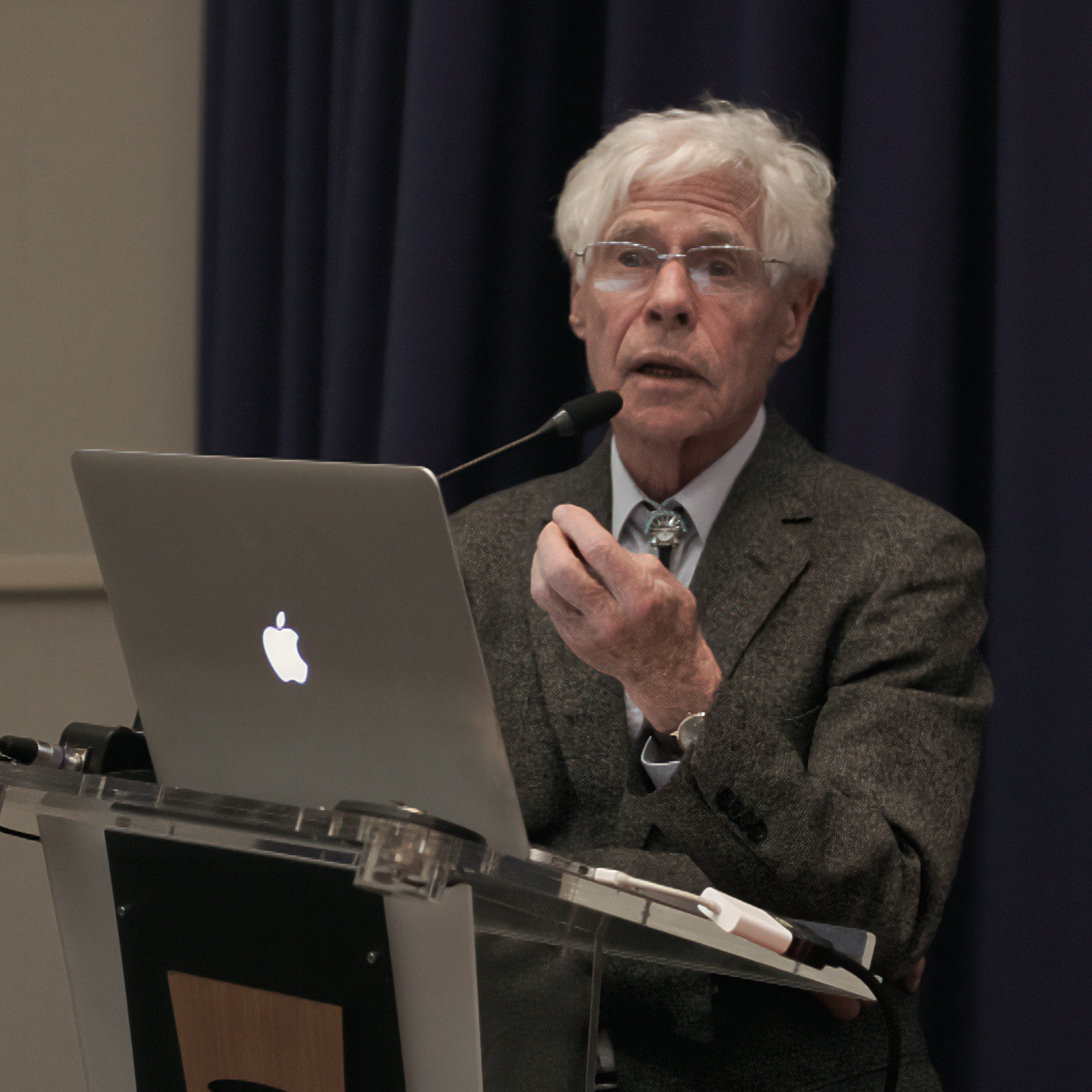 Roger-Maurice Bonnet
Credit: Jean Mouette /IAP-CNRS-SU
European and French space astronomy, as well as the IAP, are in mourning: our friend Roger–Maurice Bonnet, who had been associated with our laboratory since 2001, passed away on January 19 in Clermont-Ferrand. His career as a space astrophysicist was truly remarkable. It began in 1968 with his PhD thesis, devoted to observing and interpreting the Sun’s ultraviolet emissions.
From 1969 to 1983, he directed the Laboratoire de Physique Stellaire et Planétaire (LPSP) in Verrières-le-Buisson, which later became the Institut d’Astronomie Spatiale (IAS) in Orsay. As a PhD supervisor, he was exceptional: he knew how to guide without constraining, entrusted students with extraordinary responsibilities, and defended youth and ambition against the often hostile academic world of the time. During this period, he developed several space instruments dedicated to the detailed analysis of the solar chromosphere and corona, and contributed to the realization of a camera flown on the Giotto probe, which obtained the very first images of a cometary nucleus, namely that of Halley’s Comet.
At the birth of the LPSP, approval had been secured from NASA for the preparation of an instrument aboard the OSO-8 satellite. At the time, this was a major first, opening the way for numerous studies in solar physics at the LPSP. This achievement bore the distinctive imprint of Roger-Maurice, who insisted on opening access to this satellite to astronomers worldwide: he had just conceived the idea of a guest observer program, an initiative that has since become almost systematic, if not indispensable. This same openness to the outside world, which always characterized him, enabled Roger-Maurice, when he became Director of Scientific Programmes at ESA from 1983 to 2001, to initiate so many outstanding programs, familiar to all, that placed Europe at the very heart of the space adventure.
Indeed, during this prestigious mandate, he successfully established the agency’s first long-term scientific programme, known as Horizon 2000, which featured a particularly harmonious mix of space missions of all scales. Under his leadership, the Giotto, Hipparcos, Huygens, ISO, SOHO, XMM–Newton, Cluster, Rosetta, and Integral satellites were launched. He also supervised Europe’s contributions to the HST (Hubble Space Telescope) and to Ulysses. In 1995, he conceived the Horizon 2000 Plus programme, approved in 1996, which included, among others, Mars Express, the lunar mission SMART-1, GAIA, BepiColombo, and LISA Pathfinder. It was also during his tenure that the James Webb Space Telescope, destined to succeed HST, was conceived and approved, once again with European participation. In 1999, together with his collaborators, he defined ESA’s strategy for Earth observation, which led to the Living Planet programme.
His remarkable listening skills made him a leader appreciated by all, not only in solar physics but far beyond, across all fields of observational astrophysics, which advanced by giant strides following Roger-Maurice’s arrival at the helm of ESA’s scientific programmes.
His departure from the position of Director of Scientific Programmes at ESA in 2001 did not, of course, mark the end of his exceptional scientific career. After a brief period at CNES in 2002–2003 as Deputy Director General, he served as President of COSPAR (the Committee on Space Research), the space-science equivalent of the IAU, from 2002 to 2010, and became Executive Director of the International Space Science Institute (ISSI) in Bern from 2003 to 2013.
He was the author of two books, Les Horizons Chimériques (published in 1993) and Surviving 1000 Centuries – Can We Do It? , written with L. Woltjer and published more recently, as well as more than 150 scientific papers. Among the many distinctions that recognized his brilliant career were the CNRS Bronze and Silver Medals in 1968 and 1976 respectively, the Deslandres Prize of the French Academy of Sciences in 1980, an honorary doctorate from Imperial College London in 1997, and his promotion to the rank of Officer of the Légion d’Honneur in 1998.
Thank you, dear Roger-Maurice: through all that you accomplished for the space community, you opened our eyes to the Universe in all its components.
 Public conference, organised by IAP, May 7, 2019 (in French): “Battre la NASA ? Impossible ?”.
Public conference by Roger-Maurice Bonnet and Lodewijk Woltjer, organised at IAP, April 7, 2009 (in French): “L'humanité peut-elle survivre 1000 siècles ?”.
Janvier 2026