|
Jean-Philippe Beaulieu
Directeur de recherche CNRS Planning for the coming months:
|
|
Oceanic art, New Ireland, Uli, Malagan Main responsabilities : CoPI ARIEL mission Exoplanet coordinator & Science working group member of the EUCLID mission PI PLANET collaboration &ANR COLD-WORLDS Fun : Hotel Mauna Kea (the truth about observing) La Silla under the snow (2004) The PLANET collaboration was involved in the monitoring of the Comet 9P Tempel-1 before the Deep Impact planned on July 4, 2005. Check the gallery of pictures of the comet and the comet update from July 5, 11h00 The french garden of Recherche Bay (a kitchen garden from d'Entrecasteaux expedition unearthed in 2003 in Tasmania) Daniel estrade, etchings, watercolor
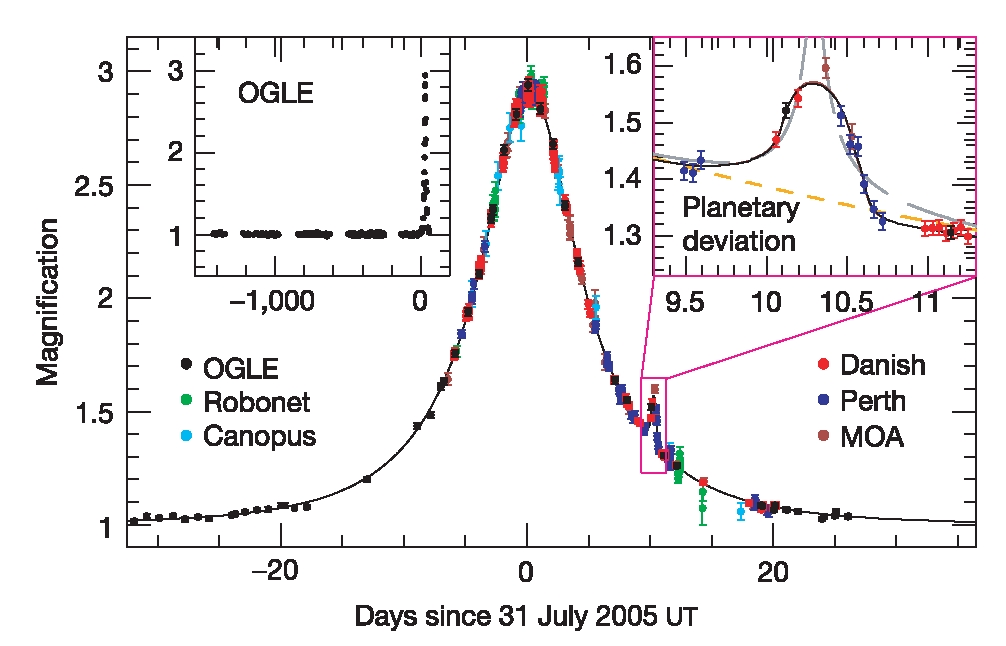
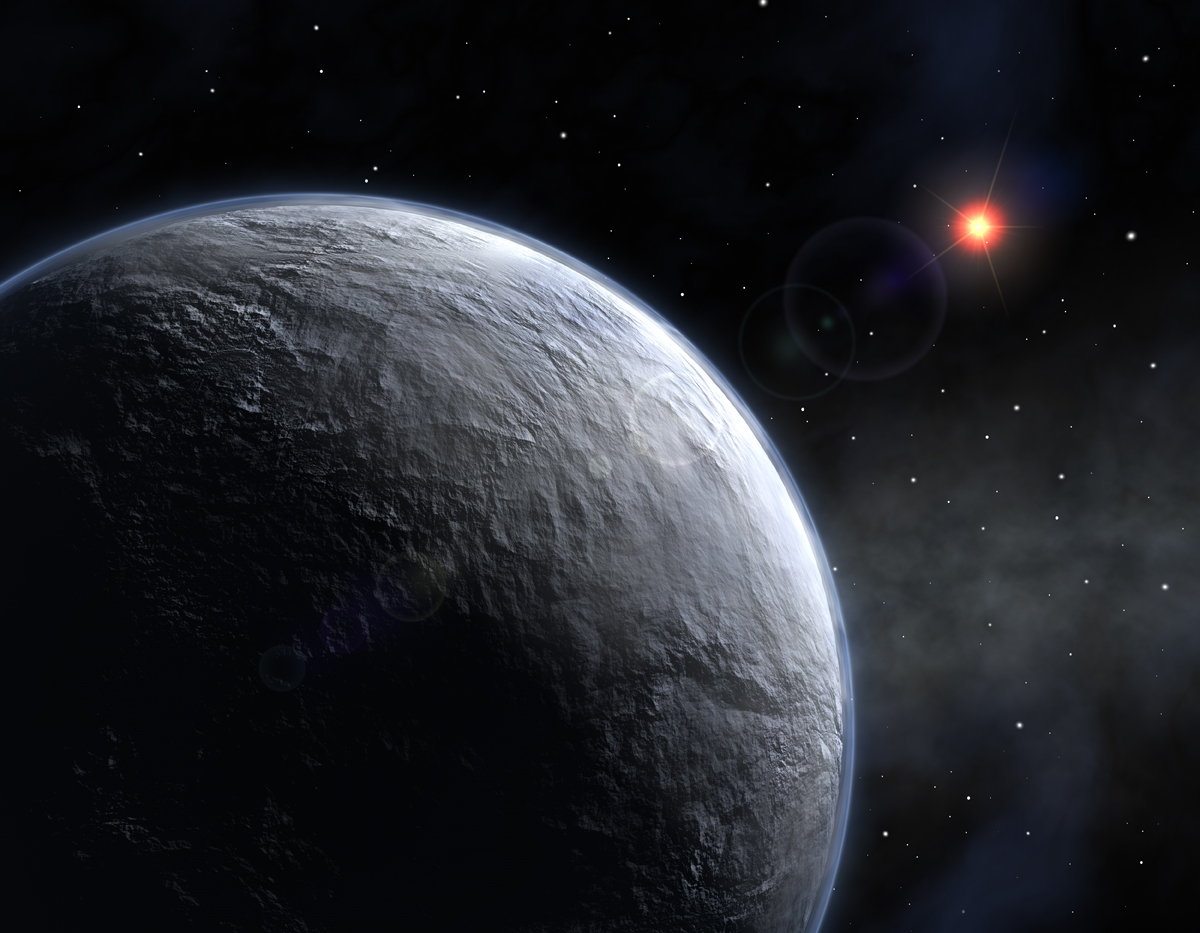
A 5.5 Earth mass planet detected by microlensing, Beaulieu et al. 2006, Nature. Download the article here. Artistic view of the planet
|
A new book published ! "Secret Garden at Recherche Bay - 1792". Launched in Hobart on February 24 2016.
Press release KECK-II and Hubble Space Telescope (July 30), KECK-II & Hubble Space telescope team up to confirm distant Uranus mass planet through microlensing.
My research activities have been fully dedicated to the field of exoplanet searches and characterization over the last 10 years. I am activily working on three topics simultaneously : - Hunting for low mass planets via microlensing - An exoplanet census via microlensing with EUCLID - Characterisation of extrasolar planets with ECHO EUCLID is an accepted ESA mission (wide field imager in space) due to be launched on 2020. ECHO (a 1.3m space telescope concept to do spectroscopy of extrasolar planets in the range 0.5-16 microns). It will be re-submitted to ESA this fall. Selected publications : Beaulieu, J.-P. et al., 2006, Discovery of a cool planet of 5.5 Earth masses through gravitational microlensing, Nature 439, 437–440 Tinetti, G., Vidal-Madjar, A., Liang, M.-C., Beaulieu, J.P. et al. 2007, Water vapour in the atmosphere of a transiting extrasolar planet, Nature, 448(7150), 169–171. Gaudi, B.S. et al., 2008, Discovery of a Jupiter/Saturn Analog with Gravitational Microlensing, Science 319, 927–930. Cassan A. Kubas D., Beaulieu J.P., et al., 2012, One or more bound planets per Milky Way star from microlensing observations, Nature 481, 167-169. Beaulieu J.P., Kerins E., Mao S. et al. 2008, Towards A Census of Earth-mass Exo-planets with Gravitational Microlensing, White Paper to the ESA Exo-Planet Roadmap Advisory Team, arXiv:0808.0005. Gould, A. et al., 2010, Frequency of Solar-like Systems and of Ice and Gas Giants Beyond the Snow Line from High-magnification Microlensing Events in 2005-2008. ApJ 720, 1073–1089. Kubas D., Beaulieu J.P., et al. 2012, A frozen super-Earth orbiting a star at the bottom of the Main Sequence, A&A in press Penny M., Kerins E., Rattenbury N., Beaulieu et al. 2013, ExELS: an exoplanet legacy science proposal for the ESA Euclid mission I. Cold exoplanets, MNRAS submitted
HOLMES : 2007-2011 Hunting cOol Low Mass Extrasolar planetS Our primary objective is the discovery of low mass planets (1 – 15 Earth masses) within 1 – 5 AU of the most common stars in our Galaxy by microlensing effects in order to measure their frequency. As a secondary objective we will do detailed studies of known planetary systems (including probing their atmospheres during planetary transits) and estimate their physical properties.
|